5th October Pop-up Event


On Monday 5th October, from 3pm – 7pm, team members from East Village Management Ltd will be hosting a pop-up event to answer any questions you may have on the building safety works around East Village.

You can find us at What3Words address ///today.paid.dairy

Smoking on balconies: why the rules matter

Balconies provide valuable outdoor space for residents, offering somewhere to relax and enjoy fresh air. However, they can also present fire safety risks if not used responsibly.

Some residents may be aware of an incident over the weekend where a discarded cigarette butt started a small fire on a balcony.

In higher-risk residential buildings (HRBs), preventing fires from starting is one of the most effective ways to protect residents, visitors and the wider community. This is why smoking on balconies is not permitted and why understanding the reasons behind this is important for everyone living in the building.

Remember: small actions can make a big difference in keeping you and your neighbours safe.

Why is smoking on a balcony a fire risk?

Cigarette butts and ash can remain hot long after they appear to have been extinguished. A dropped cigarette, ember or other smoking material has the potential to start a fire.

Many balconies contain items that can fuel a fire, including:

• Outdoor furniture and cushions
• Artificial grass or timber decking
• Plant pots and dried vegetation
• Decorative items
• Stored belongings and packaging

Wind can also play a significant role. Ash and embers may be carried onto neighbouring balconies, into communal areas or to other parts of the building, creating risks beyond the immediate area.

Fire safety is about protecting everyone

One of the challenges of living in a residential building is that the actions of one household can affect many others.

A fire that starts on a balcony can spread to neighbouring properties or affect multiple floors of a building. Smoke can also travel quickly, impacting residents who may be nowhere near the source of the fire.

While significant work is being undertaken across East Village and the sector to improve building safety, preventing accidental fires remains a key part of protecting residents and reducing risk.

Understanding why

The ban on smoking on balconies is not intended to restrict residents unnecessarily. It is a fire safety measure designed to help reduce the likelihood of an incident that could put people, homes and property at risk.

Building safety relies on a combination of physical measures, management arrangements and resident cooperation. Following the rules in place helps support the effectiveness of wider fire safety strategies and contributes to a safer environment for everyone.

Supporting a safer community

Fire safety is most effective when everyone plays their part.

Building owners, managing agents, accountable persons and contractors all have responsibilities for managing and improving building safety. Residents also have an important role to play by following fire safety guidance and helping to reduce everyday risks.

By understanding the reasons why we don’t allow residents to smoke on balconies and supporting the measures in place, residents can help protect their homes, their neighbours and the wider community.

How to stay protected during periods of extreme heat

Our priority at East Village is resident safety and wellbeing especially during periods of extreme heat. This is particularly relevant amidst ongoing remediation works which we know can affect how you ventilate your homes and keep them cool.  

With temperatures climbing to the mid 30’s again this week, it’s important to plan for this period and reduce the risk of your home overheating. This is especially important for residents who may be more vulnerable such as:  

  • Older residents 
  • Residents with disabilities 
  • Residents with underlying health conditions  
  • And families with babies or young children  

Why flats are often more susceptible to overheating 

The very nature and layout of flats or an apartment block often means they are more susceptible to higher temperatures at all times of the year. Flats on the top floor, those with windows on only one side and those that are south facing are of most at risk of maintaining higher temperatures and being harder to cool down.  

Flats, particularly those built in recent years like East Village, also have quite superior levels of insulation and energy-efficiency which can trap heat inside more. While this is a benefit in terms of general health, wellbeing and cost, care does need to be taken to avoid overheating in the summer. 

What you can do to prepare for hot weather 

The government has provided checklists for things you can do to prepare your home for hot weather: 

  1. Consider installing internal blinds or curtains. 
  2. Check that fridges, freezers, and fans are working properly. 
  3. Check medicines can be stored according to the instructions on the packaging. 
  4. Some indoor plants can help to purify and cool the air. 

What you can do during a heatwave 

  1. If possible, shade or cover windows. 
  2. If you have windows on more than one side of your home, i.e. if you occupy a corner plot, open windows on both sides to allow air to flow though.  
  3. Open windows and doors (when it is safe to do so) when the air feels cooler outside, for example at night, and try to get air flowing through the home. 
  4. Use electric fans if the air temperature is below 35°C, but do not aim the fan directly at your body as this can lead to dehydration. 
  5. Check that your heating is turned off. 
  6. To reduce heat generated in the home, turn off lights and electrical equipment that are not in use and consider cooking at cooler times of the day. 
  7. Move to a cooler part of the house, especially for sleeping if possible. 
  8. It may be cooler outside in the shade or in a public building (such as places of worship, local libraries, or supermarkets) so consider a visit as a way of cooling down if you are able to safely travel there without putting yourself at more risk from the heat. 

If your building is currently undergoing external remediation work to balconies, a reminder can be found below of when balconies can be accessed and doors can be fully opened:  

  • You won’t be able to access your balcony during site working hours (Monday to Friday, 8am to 6pm) – however you will be able to open your balcony doors (approximately 10cm) for ventilation 
  • You will have access to your balcony during weekday evenings and during weekends, as long as it is not being actively worked on 
  • Contractor access may be required on weekends, but we will write to you if you will be affected   
  • Although balcony access is allowed outside of working hours, it’s vital that residents do not enter the scaffolding area. 

Where to get more information 

We hope you enjoy the summer heat, whilst staying safe.  

To receive more government advice visit Beat the heat: keep cool at home checklist – GOV.UK. 

If you have any concerns about the condition of your home, please contact your relevant landlord. 

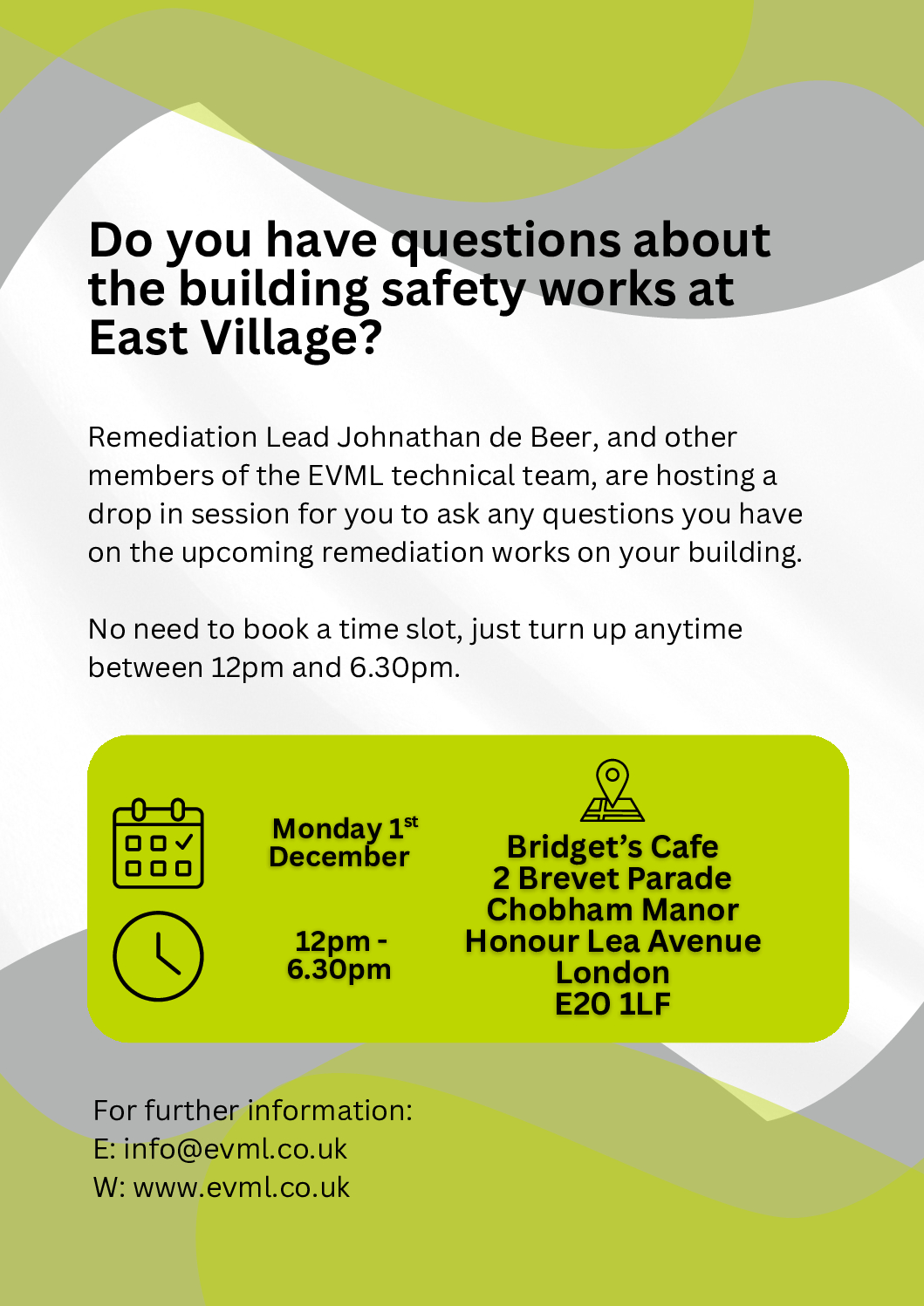
Have questions about building safety and remediation works at East Village? Come to our drop-in day!


On Saturday May 16th, from 12pm-3pm, team members from East Village Management Ltd will be hosting a pop-up event to answer any questions you may have on the building safety works around East Village.


EVML Drop In Day

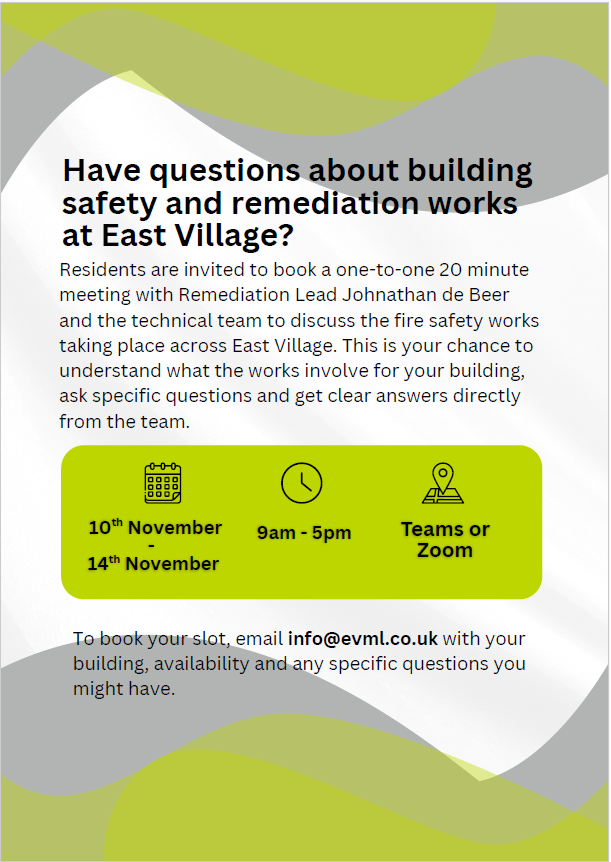
Have questions about building safety and remediation works at East Village?

Residents are invited to book a one-to-one 20 minute meeting with Remediation Lead Johnathan de Beer and the technical team to discuss the fire safety works taking place across East Village. This is your chance to
understand what the works involve for your building, ask specific questions and get clear answers directly from the team.

Date: 10th November-14th November

Time: 9am-5pm

Location: Teams or Zoom

To book your slot, email [email protected] with your building, availability and any specific questions you might have.

Competition winner receives prize!

As part of the latest edition of the EVML Remediation newsletter, readers were invited to take part in a ‘spot the hazards’ competition to be in with the chance of winning a £50 voucher for The Fat Crab on Victory Parade.

Our lucky winner was Chobham Academy student Henryk Halat! He identified all the hazards and learned all about why safety around construction sites is so important. He met with Amelia Toft from the EVML Remediation resident liaison team at The Fat Crab to receive his prize.

Aidan Hardiment, Resident Liaison Officer for the ongoing remediation works around East Village commented: “We were delighted to award Henryk a voucher for the Fat Crab, which was generously donated by Get Living. It’s a pleasure to continue our engagement with Chobham Academy and the local community around East Village as we work together to promote safety around our construction project. Keep an eye out for our next competition!”

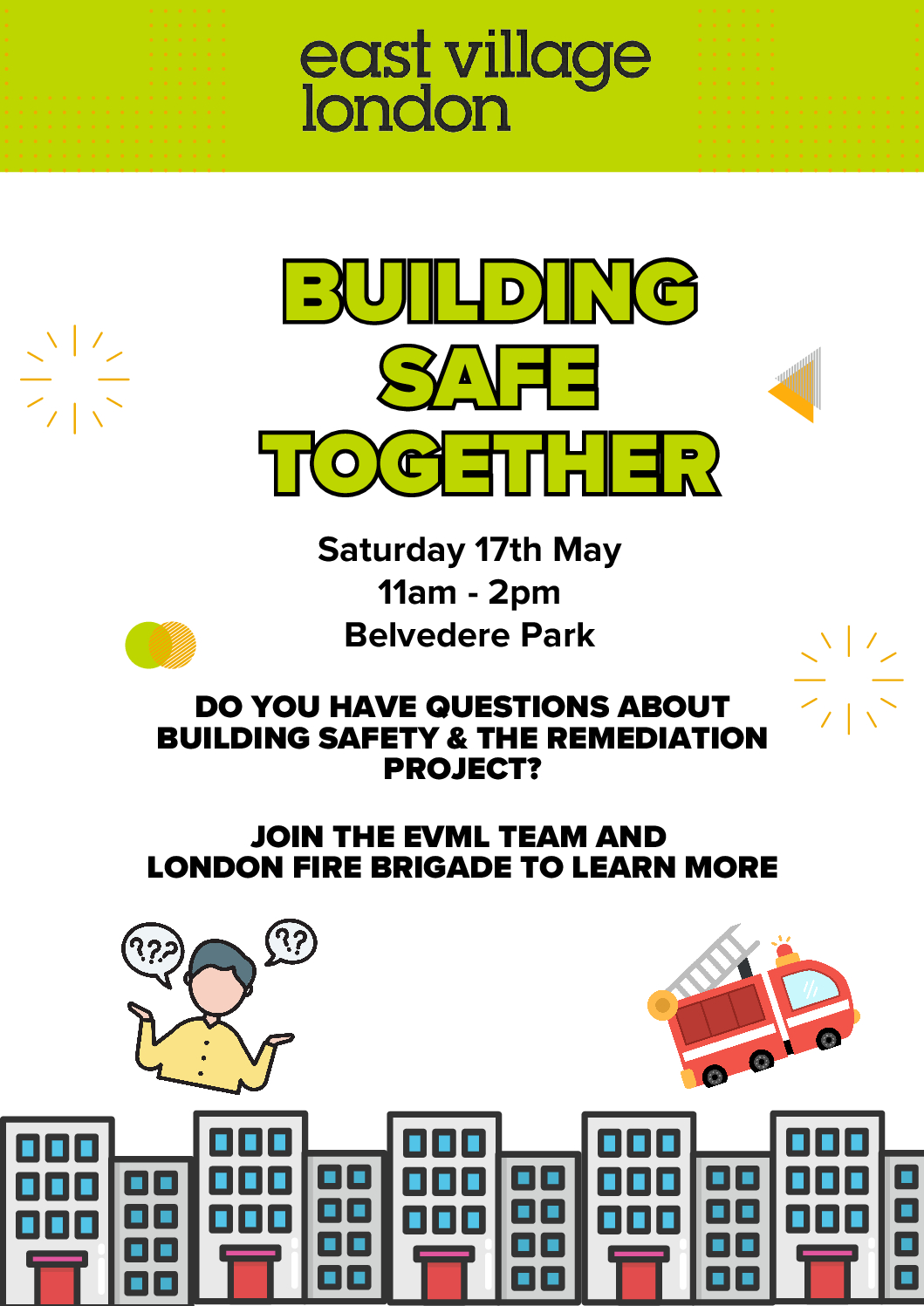
Building Safe Together Event

On Saturday May 17th, from 11am-2pm, team members from East Village Management Ltd will be hosting a pop-up event to answer any questions you may have on the building safety works around East Village.

Errigal donates to local food bank

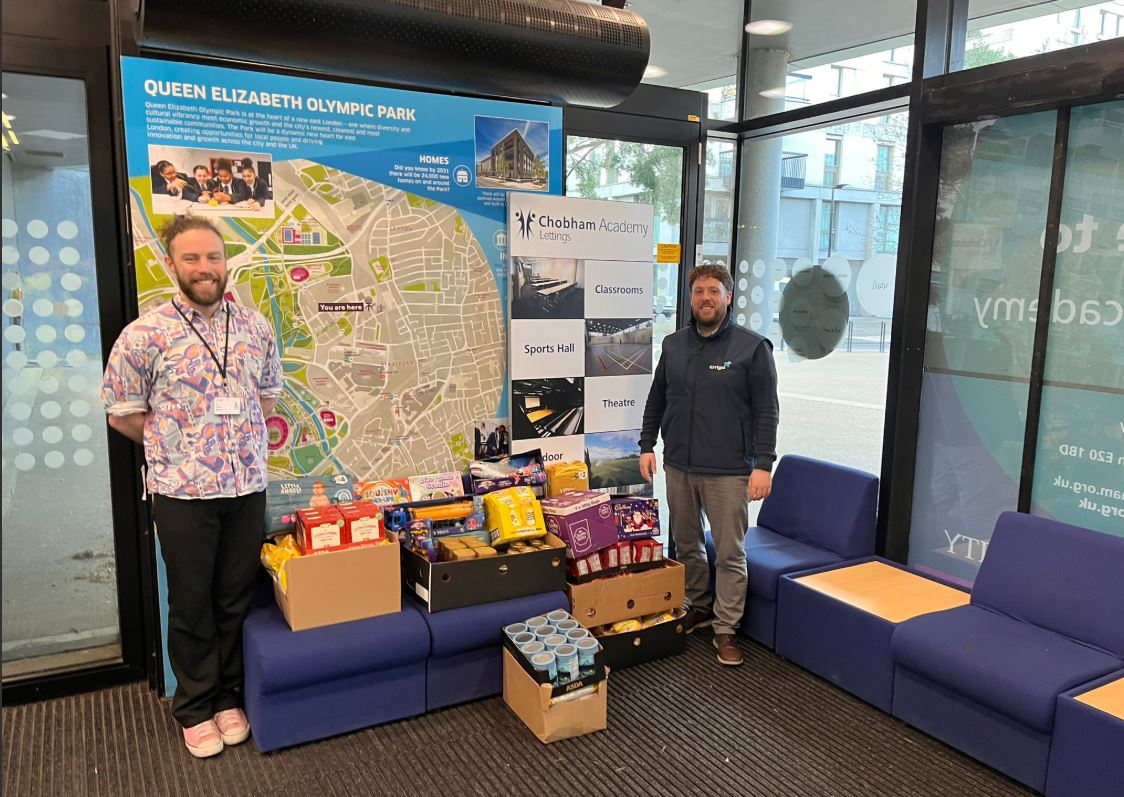
This Christmas, Errigal supported Chobham Academy’s Christmas Food Bank, alongside Hygiene Bank with a donation of food, toiletries and festive treats worth £250.
Aidan Hardiment, resident liaison officer for Errigal commented: “It was great to once again support the food bank over the Christmas period and donate goods that will really make a difference to those who need it. We’ve worked with Chobham Academy in a variety of ways across 2024 and look forward to doing more together for the local community next year”.
If you are aware of any community initiatives around East Village that the team could support with, please do get in touch.

Errigal support Chobham Academy

Errigal has extended its support of local Chobham Academy once again this year by sponsoring the girls’ netball team.
Errigal, the main contractor appointed to complete the facade remediation works to five buildings around East Village, has now unveiled the newly designed kits.
Students and teachers around the school will be familiar with the Resident Liaison Team and might have met them at one of the many events throughout the year including Black History Month classroom workshops and the summer fete.

Resident liaison officer Aidan Hardiment comments: “It was brilliant to see the excitement on the children’s faces when we unveiled the new kit and we even got to join in with some training drills. Go team HCA!”We can’t wait to see what the team do next at Chobham Academy!